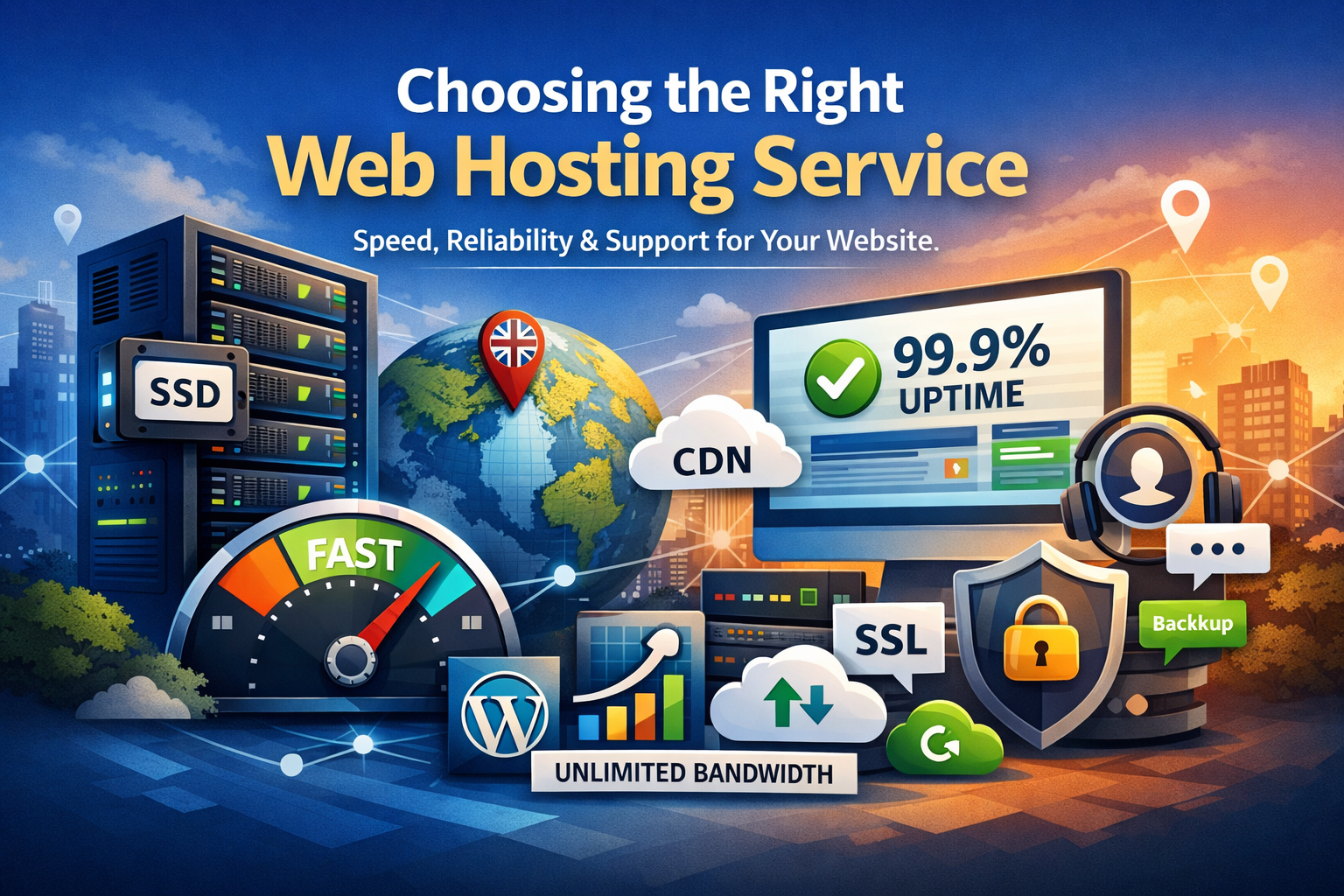
Choosing the right web hosting service is one of the most important decisions you will make for your website. Whether you are launching a personal blog, an eCommerce store, or a business website, your hosting provider directly impacts your site’s speed, performance, security, and user experience.
With so many hosting options available in the UK and globally, it can be overwhelming to make the right choice. To simplify the process, there are nine essential factors you must consider. Understanding these will help you select a hosting provider that not only meets your current needs but also supports your future growth.
1. Speed and Performance Matter the Most
Website speed is critical for both user experience and search engine rankings. Studies show that users expect a website to load within a few seconds, and any delay can lead to higher bounce rates and lost customers.
While elements like images, scripts, and design affect speed, your hosting provider plays the biggest role. A good web host uses optimized servers, modern hardware, and caching technologies to ensure fast loading times. Choosing a provider with SSD or NVMe storage can further enhance performance.
Faster websites not only keep visitors engaged but also rank better on search engines like Google, making speed a top priority.
2. Server Locations and Latency
Server location significantly impacts how quickly your website loads for users. The closer your server is to your target audience, the lower the latency and the faster the loading time.
If your primary audience is in the UK, it’s best to choose a hosting provider with UK-based servers or nearby European data centers. For global audiences, consider providers that offer multiple server locations or a content delivery network (CDN).
Optimizing server location ensures a smooth browsing experience and improves overall site performance.
3. Uptime and Reliability
Uptime refers to the percentage of time your website remains accessible online. Even a small amount of downtime can result in lost traffic, reduced trust, and lower revenue.
A reliable hosting provider should offer at least 99.9% uptime guarantee. This ensures your website stays online and available to visitors around the clock.
Always check reviews and uptime reports before choosing a provider, as consistent reliability is crucial for long-term success.
4. Server Response Time
Server response time is the time it takes for your server to respond to a user’s request. It is a key factor in determining your website’s overall speed.
A slow server response can frustrate users and negatively impact engagement. Ideally, your hosting provider should offer optimized servers with low response times to ensure a seamless browsing experience.
Fast response times contribute to better performance, improved SEO rankings, and higher user satisfaction.
5. Disk Space and Storage Type
Disk space determines how much content your website can store, including images, videos, databases, and code files. Having sufficient storage is essential for maintaining your site’s functionality and quality.
Modern hosting providers offer SSD or NVMe storage, which is significantly faster than traditional HDD storage. Faster storage improves data access speeds, resulting in quicker page loading and better performance.
When choosing a hosting plan, make sure it provides enough storage for your current needs and future expansion.
6. Pricing and Value for Money
Cost is always an important consideration, but it should not be the only factor. Cheap hosting plans may come with limitations such as slower performance, fewer features, or poor support.
Instead of focusing solely on price, look for value. A good hosting provider should offer essential features like free SSL certificates, backups, email accounts, and security tools within the package.
Investing in a reliable hosting service can save you time, money, and frustration in the long run.
7. User Interface and Ease of Use
A user-friendly interface is especially important for beginners. Managing your website should be simple and intuitive, even if you have little technical experience.
Many hosting providers offer control panels like cPanel or custom dashboards that allow you to manage domains, emails, databases, and files.
An easy-to-use interface reduces the learning curve and helps you focus on building and growing your website rather than dealing with technical complications.
8. Customer Support and Assistance
Reliable customer support is essential for handling technical issues, downtime, or unexpected problems. Even the best hosting providers can experience occasional issues, so having access to support is crucial.
Look for providers that offer 24/7 customer support through multiple channels such as live chat, email, and phone. Quick response times and knowledgeable support staff can make a huge difference in resolving issues efficiently.
Good support ensures peace of mind and keeps your website running smoothly.
9. Bandwidth and Scalability
Bandwidth refers to the amount of data your website can transfer to users. If your site receives high traffic or contains heavy media content, you will need sufficient bandwidth to handle it.
Many hosting providers offer unlimited or scalable bandwidth, allowing your website to grow without performance issues.
Choosing a scalable hosting plan ensures that your website can handle increased traffic as your business or audience expands.
Additional Features to Consider
Beyond the core factors, there are several extra features that can enhance your hosting experience:
- Free SSL Certificates for secure connections
- Automated Backups to protect your data
- One-Click Installers for platforms like WordPress
- Security Features such as firewalls and malware protection
- Email Hosting for professional communication
These features add value and make managing your website easier and more secure.
Final Thoughts: Choosing the Right Hosting Provider
Selecting the best UK web hosting provider requires careful evaluation of performance, reliability, features, and support. By focusing on the nine key factors outlined above, you can make an informed decision that aligns with your goals.
A high-quality hosting provider not only ensures fast loading speeds and strong security but also provides the scalability needed for future growth. Whether you are a beginner or an experienced user, investing in the right hosting service is essential for building a successful online presence.
FAQs (For SEO & Featured Snippets)
What is the best web hosting for beginners in the UK?
The best hosting for beginners is one that offers easy setup, affordable pricing, reliable performance, and strong customer support.
How important is server location for web hosting?
Server location is very important as it affects website speed and latency. Choosing a server close to your audience improves performance.
What uptime should I look for in a hosting provider?
You should look for at least a 99.9% uptime guarantee to ensure your website remains accessible.
Is unlimited bandwidth necessary?
Unlimited bandwidth is beneficial for growing websites, as it prevents performance issues during traffic spikes.